How we help

Most customer journeys were never designed. They just happened.

Every business has one. How a stranger finds you, decides to buy, becomes a customer, and comes back. When nobody designs it, the customer carries the friction, and you lose them at the seams. We find where, and we fix it.

The problem

The work doesn't disappear. It moves to the customer.

Businesses are always trying to make things simpler for themselves. A new form. A new system. A policy that saves the front desk ten minutes.

Almost every time, that work doesn’t disappear. It moves to the customer. They fill out the longer form. They wait for the callback. They re-enter their information. They figure out on their own whether you’re the right fit, because the website didn’t tell them.

None of it feels like a big deal from the inside. From the outside, it adds up to a business that’s slightly harder to work with than the next one. Customers don’t complain about that. They just quietly go with the easier option.

That’s the whole problem, and it shows up at every stage of the journey.

The five stages

The five stages

We look at a customer journey in five stages. Each has its own friction, and each one costs you customers in a different way.

  1. Attract

    A stranger becomes aware of you.

    Friction
    Invisible in search, no proof you're real, no idea what you charge or who you serve.
    Costs you
    Qualified inquiries you never get.
  2. Convert

    An interested prospect becomes a customer.

    Friction
    Slow response, hidden pricing, dead-end forms, quotes with no way to say yes.
    Costs you
    Sales lost after the expensive part was already done.
  3. Onboard

    A new customer has their first experience with you.

    Friction
    No welcome, no expectations set, no idea how to reach you.
    Costs you
    The second purchase, decided in the first thirty days.
  4. Retain

    A customer comes back.

    Friction
    Silence between purchases, no reminder when they're due, starting over every time.
    Costs you
    Revenue from people you already paid to acquire.
  5. Reactivate

    A lapsed customer returns.

    Friction
    Nobody asked, no reason to return, no easy way back.
    Costs you
    The fastest, cheapest revenue you have sitting in a spreadsheet.

We organize our work around three of these. Onboard and Reactivate live inside Retain, because that’s where they belong in practice.

Start here

Which stage is yours

Most owners already know. Pick the sentence that sounds like you.

How we work

How we work

We start with a diagnosis, not a proposal.

Before we recommend anything, we score all five stages, walk your business the way a customer does, and put a number on what each stage is costing you. The diagnostic is paid, credited toward the work, and yours to keep whether or not you hire us.

We fix the constraint first.

Every business has one stage that’s holding the rest back. Spending on any other stage first is spending on a bigger version of the same problem. We’ll tell you which stage that is, even if it’s not the one you came in asking about.

We connect the systems.

Website, email, search, content, photography, ads. They’re the tools, and they only work when they’re built to hand a customer from one stage to the next. Disconnected channels are how businesses end up with traffic and no sales, or customers and no repeat customers.

We report on the number.

Inquiries. Close rate. Repeat rate. Revenue from returning customers. Not impressions and opens. You’ll see the number move, or you’ll see exactly why it hasn’t.

Our prices are published.

Setup by stage, two monthly plans, the same for every business. You’ll know what the work costs before the diagnostic tells you which stage needs it.

Why this instead of buying a website, or SEO, or email

You can buy all of those things separately. You can generate most of them with AI now. A website, a keyword list, an email sequence. The tools have never been cheaper.

What hasn’t gotten cheaper is knowing which one you actually need, in what order, and being accountable for the number afterward.

A tool can write you an email sequence. It can’t tell you that your real problem is a quote process that takes four days, or that your website is bringing in the wrong customers, or that the cheapest revenue you have is a list of 400 past customers nobody’s contacted. That takes someone who’s looked at your business from the customer’s side and has done it across a hundred others.

That’s what you’re buying here. The services are how the work gets done.

Proof

What this looks like in practice

Attract

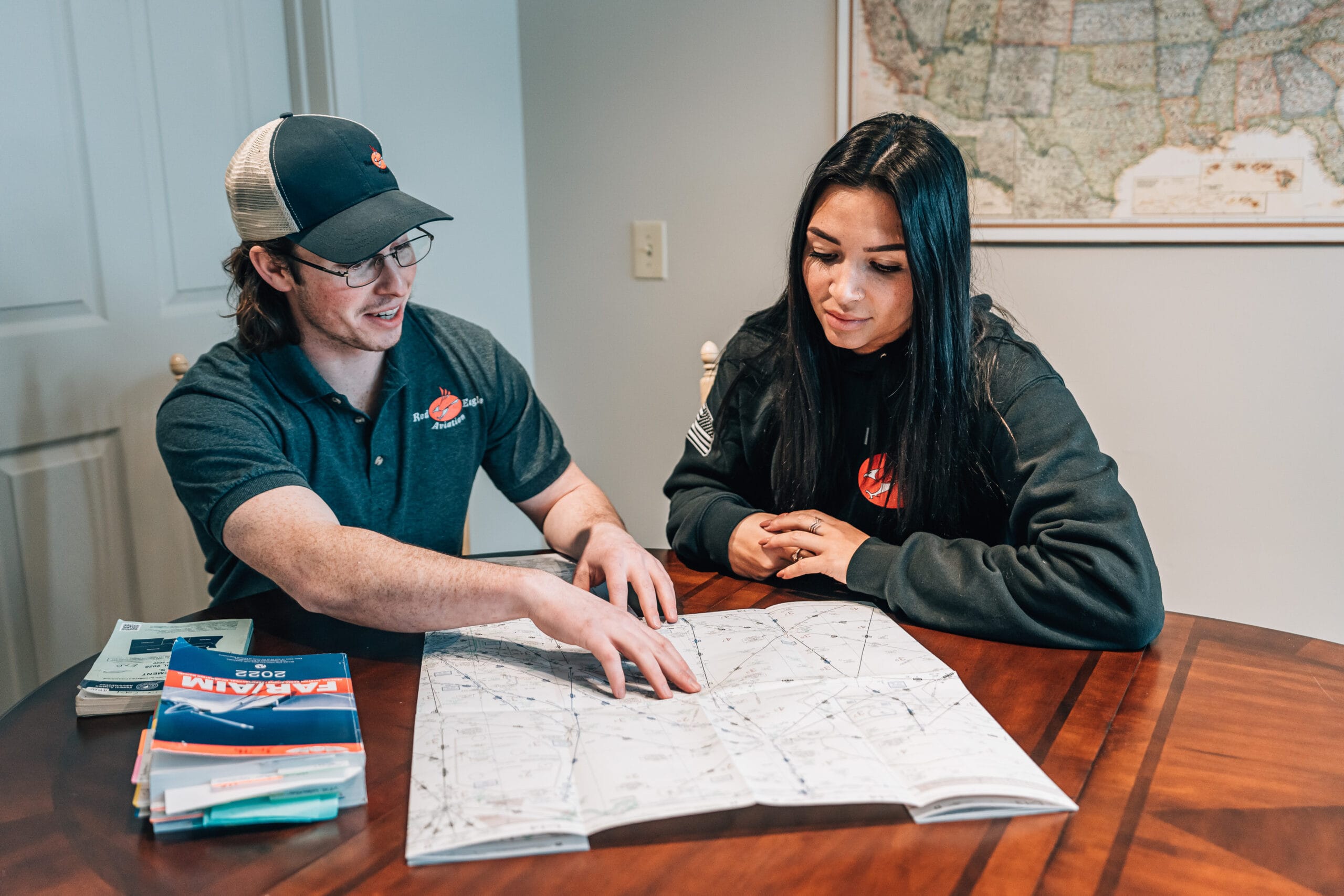
Red Eagle Aviation

  • Rebuilt the website
  • Ongoing SEO
Result

From invisible in search to first page for every service.

Read the case study →
Convert

Glacier Precast Concrete

  • Custom website build
  • Dynamic quote-request forms
  • Google Ads
Result

A custom site with dynamic quote-request forms, and Google Ads pointed at them.

Read the case study →

Shared with permission.

Next step

Find out where your customers are doing your work.

The diagnostic scores all five stages, identifies the one costing you the most, and gives you a priced plan to fix it. You keep the findings either way.

Start with the diagnostic →